
Knee Pain After Starting the Gym - A Shoreham Physiotherapist Explains Why
You join a gym, love your new routine, find the rhythm of your new program, and then it happens.
Your knee starts aching every time you squat or walk downstairs.
“Have I damaged something?”
“Should I stop training?”
“Is this arthritis?”
In reality, most knee pain that develops after starting a new gym routine is far less sinister than people imagine.
As a physio, knee pain is one of the most common problems I assess. Whether it’s runners increasing their mileage, gym-goers returning after a break, or people beginning an exercise programme for the first time, the underlying cause is often very different from what patients initially expect.
Why Does the Knee Hurt When You Start Training?
The knee is an incredible joint, Every time you walk downstairs it can experience forces of around four times your body weight. Add running, jumping, squatting or lunging, and those forces increase dramatically.
The knee has the difficult job of being both stable and mobile at the same time. It must bend and straighten efficiently while absorbing large amounts of force and keeping you balanced on a single leg.
When you start a new training programme, the knee suddenly has to cope with loads and movements it may not have experienced for months or even years. In many cases, the joint itself is perfectly healthy. The issue is that the muscles, tendons and movement patterns around it have not yet adapted to the new demands being placed upon them.
This is why knee pain after starting the gym is so common.
Why Squats and Lunges Can Trigger Knee Pain
Squats are often blamed for knee pain, but they are rarely the true problem.
A squat requires adequate ankle mobility, hip mobility, quadriceps strength and good control of the knee as it moves over the foot. If one of these areas is lacking, the knee can end up absorbing more stress than it is prepared for.
This commonly presents as pain around the front of the knee or underneath the kneecap, particularly when squatting deeply, climbing stairs or standing up from a chair.
Lunges can be even more demanding because they are performed on one leg. The knee must manage forces from multiple directions while maintaining balance and stability.
This is one reason physiotherapists often assess hip strength when someone presents with knee pain. If the hip struggles to control the position of the thigh, the knee is often asked to compensate.
The result is usually not injury in the traditional sense, but irritation of tissues that have simply been asked to do more than they were prepared for.
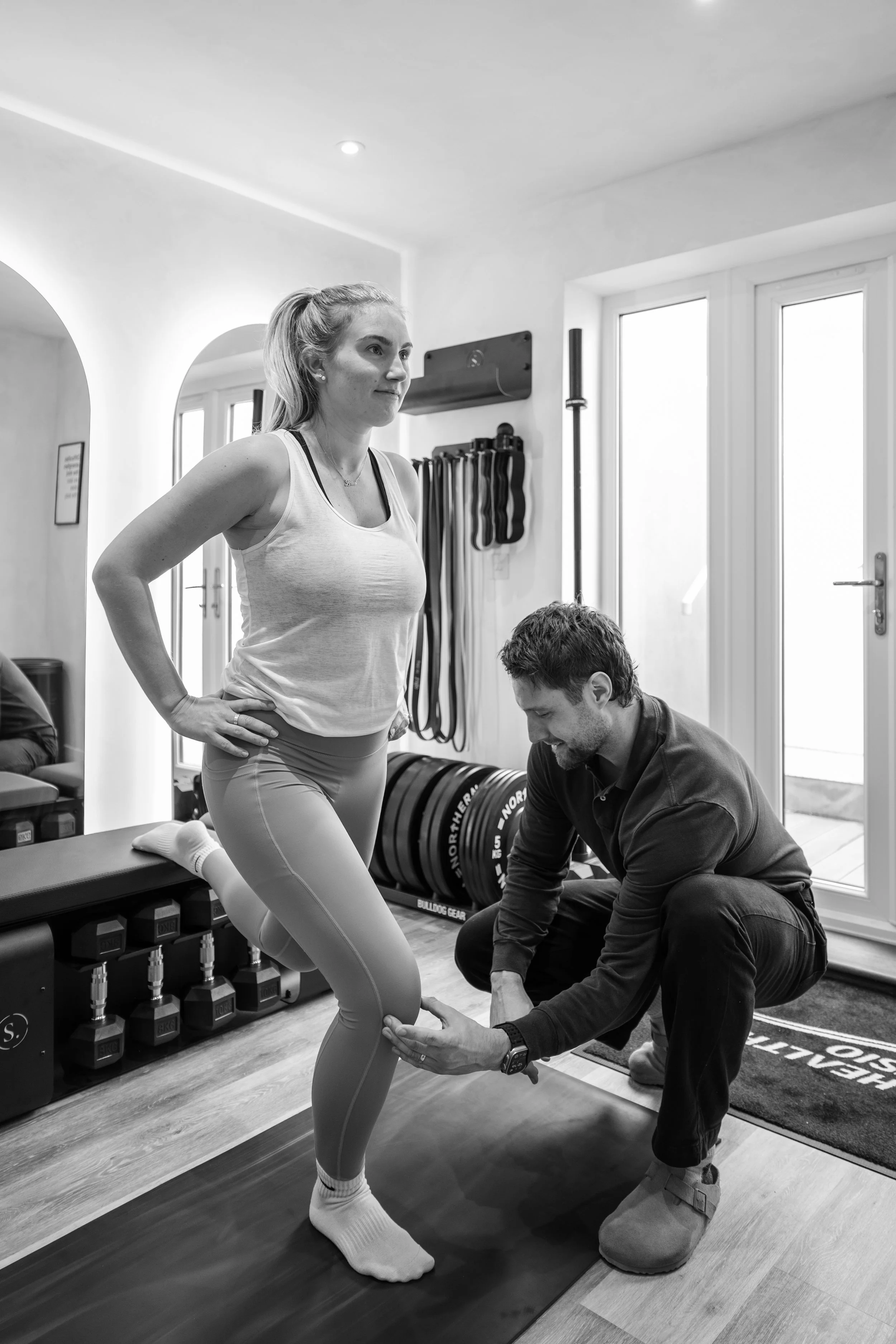
Common Types of Knee Pain We See After Starting the Gym
Pain Around the Kneecap
Pain around or behind the kneecap is one of the most common complaints after starting a gym programme. This is often associated with patellofemoral pain, sometimes called runner’s knee, and can be aggravated by squats, lunges, stairs and prolonged sitting.
Pain Below the Kneecap
Pain just below the kneecap may be related to irritation of the patellar tendon. This often develops when jumping, sprinting, heavy squatting or other high-load exercises are introduced too quickly.
Pain On The Inside Of The Knee
Pain on the inside of the knee can have several causes, including overload of the joint itself or irritation of the soft tissues that support it. A proper assessment helps determine which structures are involved.
Pain At The Back Of The Knee
Pain behind the knee is often related to the hamstrings, calf muscles or the joint becoming irritated. Despite common fears, it is not always a sign of a serious injury.
The Good News
In the vast majority of cases, gym-related knee pain is very manageable.
The solution is rarely complete rest.
Instead, recovery usually involves adjusting training loads, improving movement quality, strengthening the muscles around the joint and gradually rebuilding tolerance to exercise.
At Shore Health Physio in Shoreham-by-Sea, knee pain is one of the most common conditions we assess. From recreational runners and gym members to active adults returning to exercise after injury, most people improve well once the true cause of their symptoms is identified.
Frequently Asked Questions
My Knee Clicks – Is That OK?
In most cases, yes.
Clicking, popping or crunching sounds from the knee, sometimes called crepitus, are extremely common and usually harmless, particularly when there is no pain or swelling alongside them.
These sounds often come from small gas bubbles within the joint fluid or from tendons and ligaments moving slightly over bony surfaces.
If the clicking is associated with pain, swelling or instability, it is worth getting assessed. On its own, however, knee noise is rarely a sign of damage.
I Can’t Fully Bend My Knee – Is That OK?
A small reduction in knee movement after starting a new exercise programme is not unusual.
This is often related to muscle tightness, mild swelling or temporary irritation rather than a structural problem.
However, if you have experienced a sudden loss of movement following a twist, fall or sporting injury, particularly if the knee feels locked or unstable, it is sensible to seek an assessment sooner rather than later.
My Parents Have Bad Knees – Is It Genetic?
There can be a genetic component to some knee conditions, particularly osteoarthritis.
However, genetics is only one piece of the puzzle.
Strength levels, activity levels, body weight, previous injuries and overall health all influence how well your knees tolerate load throughout life.
Having a family history of knee problems does not mean you are destined to experience the same issues.
Should I Stop Going To The Gym If My Knee Hurts?
Not necessarily.
In many cases, complete rest can actually slow recovery.
The key is usually modifying exercises, reducing training loads temporarily and continuing to strengthen the tissues involved.
A physiotherapy assessment can help identify what is safe to continue and what should be adjusted while symptoms settle.
When To See A Physiotherapist
Knee pain does not automatically mean damage, arthritis or that you need to stop exercising.
More often, it is a sign that the joint has been asked to do more than it is currently conditioned for.
With the right assessment, a few adjustments to training and a targeted strengthening programme, most gym-related knee pain settles extremely well.
If you’re struggling with knee pain after starting the gym and would like expert advice, Shore Health Physio in Shoreham-by-Sea can help identify the cause and get you back to training with confidence.
Written by CJ Bestwick, MSc Physiotherapist and founder of Shore Health Physio.
If you/someone you know is struggling from lower back pain, this article might help!