
Lower Back Pain After Starting The Gym - Shoreham Physio
You finally commit to getting fitter. You sign up to the gym, start lifting weights, feel motivated for the first time in months… and then your lower back starts aching.
It’s frustrating. You’ve started doing something positive for your health, and now it feels like your body is fighting back.
The good news? In most cases, it’s completely normal.
Before you spiral into a Google rabbit hole and convince yourself something is seriously wrong, take a breath.
Lower back pain when starting or returning to exercise is incredibly common, and the vast majority of the time it is your body adapting to new demands, not a sign that something is broken.
At Shore Health Physio in Shoreham-by-Sea, we regularly assess gym-related back pain in people from Shoreham, Lancing, Worthing, Southwick, Portslade, Hove and Brighton who have started training and found their lower back is now speaking up. Here’s what you need to know.
Why Does My Back Hurt After the Gym?
Your lower back is made up of vertebrae, discs, joints, muscles, ligaments and tendons — all working together under load.
When you introduce new movements, heavier weights, or longer training sessions, the tissues in your back experience stress they haven’t felt for a while, or perhaps ever before.
That stress triggers a mild inflammatory response, which you feel as soreness, stiffness or achiness, usually peaking 24–48 hours after training.
This is a completely normal part of adaptation and, over time, these tissues become stronger and more tolerant to load.
In some cases, we can slightly overdo it, and the inflammation may simply hang around for a little longer.
Do I Need an MRI?
It’s worth knowing that imaging findings — things picked up on scans — are surprisingly poor predictors of pain.
Research has consistently shown that changes seen on MRI scans are extremely common in people with no pain whatsoever, and that the presence of pain doesn’t necessarily mean structural damage has occurred.
In other words, pain doesn’t automatically mean damage.
One of the biggest predictors of ongoing back pain isn’t what a scan shows — it’s fear.
Many people become worried that they’ve “slipped a disc” or damaged their spine, which leads them to stop exercising altogether. Unfortunately, avoiding movement often makes recovery slower.
In most cases, the spine is remarkably strong and responds positively to gradual exposure to movement and exercise.
Should I Stretch a Sore Lower Back?
Generally, yes — with some nuance.
Gentle, controlled movement tends to help more than rest. Sitting still often allows muscles to stiffen further, and that can actually make things worse.
Simple movements such as a lying knee-to-chest stretch, child’s pose, or a slow cat-cow can help reduce muscle tension and improve how you feel. The key word is gentle.
You’re not trying to force range of movement or push through sharp pain. If a stretch reliably makes things worse, stop doing it. If it provides relief or makes movement easier, it’s probably helping.
Is It Okay If My Back Clicks?
Almost always, yes.
Despite what many people have been told, clicking doesn’t necessarily mean joints are moving “out of place”.
The exact cause isn’t always known and may involve tendons, ligaments, or pressure changes within joints.
The important thing is that, in the absence of pain, spinal clicking is usually harmless.
Heat or Ice — Which One Should I Use?
For general muscle soreness and stiffness from the gym, heat tends to win.
A warm shower, a heat pad, or a hot water bottle applied to the lower back can help relax muscle tension and increase local blood flow. Most people find this more comfortable and effective than ice for this type of pain.
Ice is typically more useful in the immediate aftermath of a specific acute injury — for example a sudden strain where there is significant swelling or bruising.
What Actually Helps? The Evidence for Exercise
Here’s the encouraging part.
The evidence for managing lower back pain is strongly in favour of staying active and exercising appropriately — and the research continues to reinforce this message.
In practical terms, this means exercises that target the deep stabilising muscles of the spine — your lumbar paraspinals, multifidus and pelvic floor — often form the foundation of a good rehabilitation programme.
These aren’t the “big” muscles you see in the mirror. They’re the quieter muscles that help support your spine during movement.
A few evidence-based starting points include:
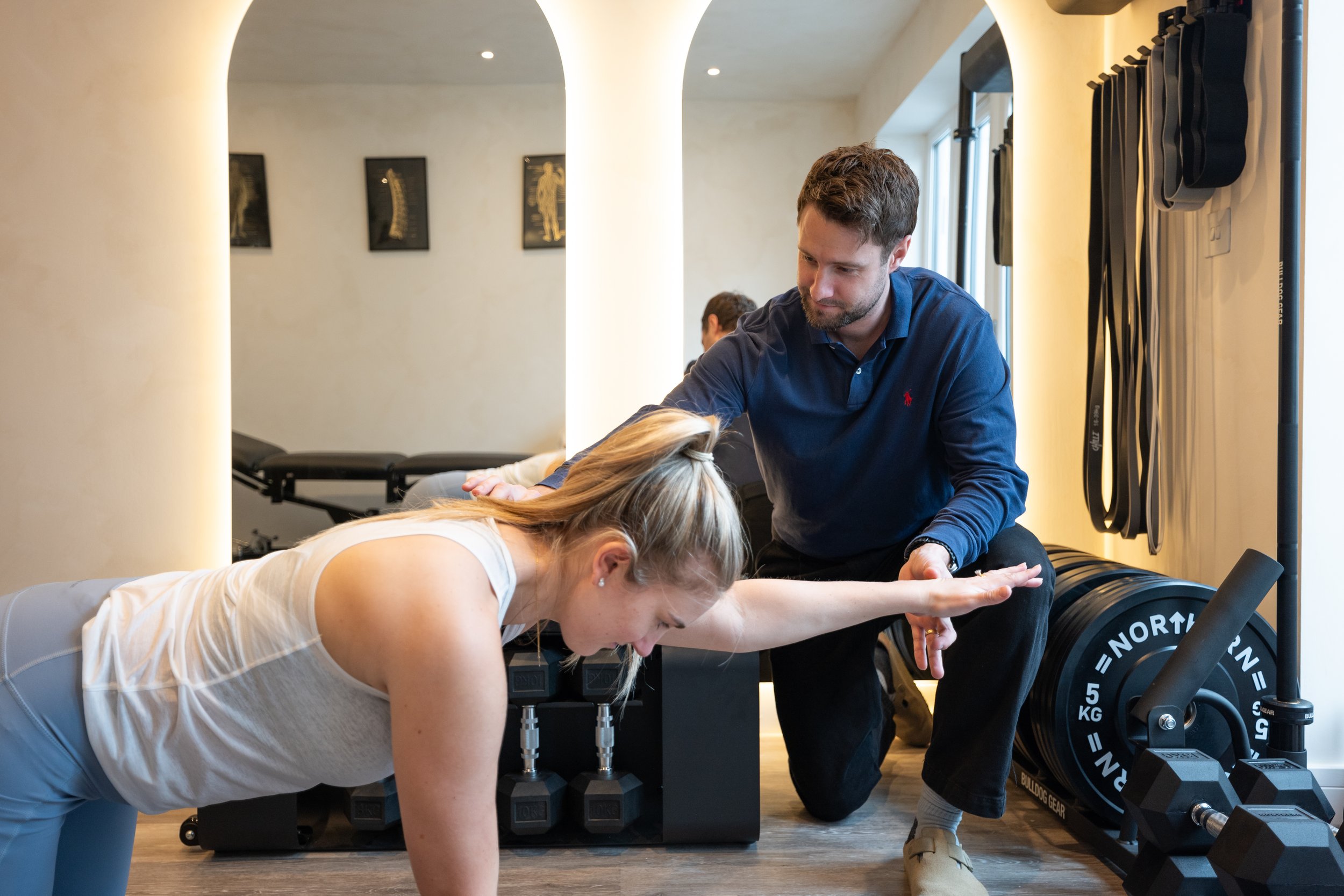
Dead bugs — a controlled core exercise that builds deep abdominal strength without heavily loading the spine
Bird-dogs — excellent for improving spinal stability and coordination
Glute bridges — strengthen the gluteal muscles, which play a huge role in supporting the lower back
Cat-cow mobilisation — gentle spinal movement to reduce stiffness and improve range of motion
Alongside specific exercises, simply staying active matters enormously.
Walking is one of the most underrated interventions for lower back pain. It gently loads the spine, promotes circulation and keeps the nervous system calm.
When Should I See a Physiotherapist?
Most gym-related lower back pain settles within a few days to a couple of weeks with sensible management.
However, there are times when getting a professional opinion is the right move.
Consider booking in with a physiotherapist if:
Your pain isn’t improving after two to three weeks
Your symptoms are significantly affecting your sleep or daily life
You’re unsure whether you’re doing the right exercises
Pain is spreading into your leg
You experience changes in bladder or bowel function
If you’re looking for a physiotherapist in Shoreham-by-Sea, Lancing, Worthing, Southwick, Portslade, Hove or Brighton, Shore Health Physio offers one-to-one assessments tailored to your goals and training.
We’ll get to the bottom of what’s going on, provide a clear explanation, and build a plan that gets you back to doing what you enjoy — stronger than before.
Frequently Asked Questions
Should I Stop Going to the Gym If My Lower Back Hurts?
In most cases, no.
Reducing the load slightly, modifying certain exercises and continuing to move is usually more beneficial than complete rest.
Is Walking Good for Lower Back Pain?
Yes.
Walking is one of the most consistently recommended activities for people with lower back pain and is often an excellent place to start.
Can Deadlifts Cause Lower Back Pain?
They can temporarily aggravate sensitive tissues, particularly if you’ve increased weight, volume or training frequency too quickly.
However, deadlifts themselves are not inherently bad for your back and can be a valuable exercise when performed appropriately.
Do I Need a Scan for Lower Back Pain?
Most people do not require imaging unless there are specific symptoms suggesting something more serious.
A physiotherapist can help determine whether further investigation is appropriate.
Should I Use Heat or Ice for Lower Back Pain?
For gym-related soreness and stiffness, most people find heat more comfortable and effective.
Ice tends to be more useful immediately after a specific acute injury where swelling is present.
The Bigger Picture
Lower back pain is one of the most researched conditions in all of medicine, and perhaps the most important thing that research tells us is this: most people recover, and staying active is central to that recovery.
The old advice to rest and wait it out has largely been retired.
Movement is medicine.
Starting the gym is one of the best things you can do for your long-term spinal health.
Your spine is designed to move, bend, lift, twist and adapt to challenge. A temporary flare-up after starting the gym doesn’t mean you’ve failed — it often means your body is doing exactly what it’s designed to do.
With the right advice, sensible progression and appropriate exercise, most people return to training stronger, more confident and more resilient than before.
Shore Health Physio is based in Shoreham-by-Sea and serves clients across Worthing, Lancing, Southwick, Portslade, Hove and Brighton.
To book an assessment, get in touch today or book online via our website.
Written by CJ Bestwick, MSc Physiotherapist and founder of shore Health Physio.
Also experiencing knee pain after starting the gym? Read our article on knee pain hERE.